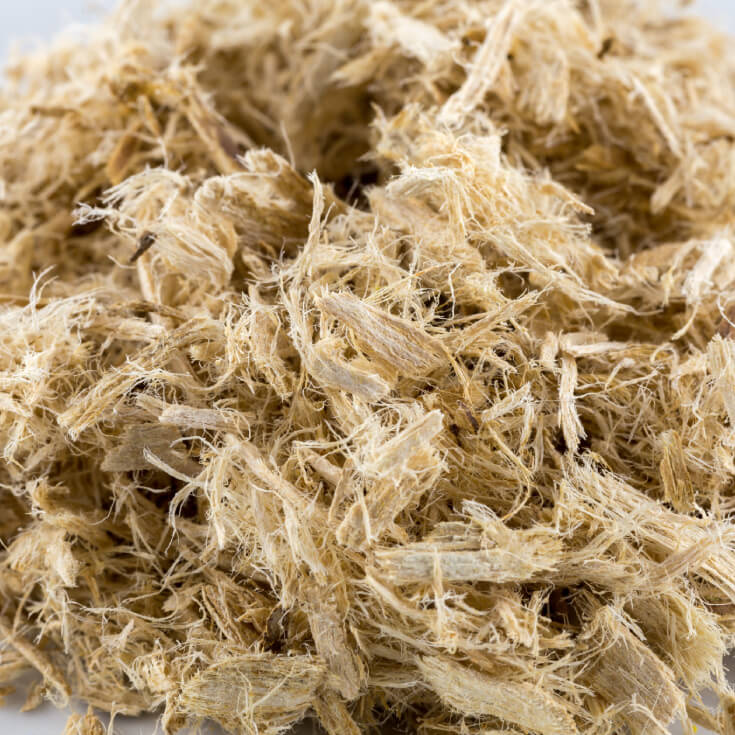
Properties: Warm, slightly bitter
Meridans Entered:
Primary: Lung, Large Intestine
Suggested Daily Dosage: 3g in decoction.
Cautions: Should be avoided during pregnancy.
Due to its mucilaginous properties it may slow the absorption time of certain medications.
Due to its traditional use as a mechanical abortifacient Slippery Elm bark may only be sold in powdered form in the UK. The whole or unpowdered form is restricted for use under the UK's list of banned and restricted herbal ingredients which states that it can only be sold in premises which are registered pharmacies and by or under the supervision of a pharmacist.
Notes:
Information has been taken from:
http://alternativehealing.org/slippery_elm.htm
https://www.whiterabbitinstituteofhealing.com/herbs/slippery-elm/
This herb is used in the alternative cancer remedy known as Essiac Formula. This consists of:
Burdock root (niu bang gen) (Arctium lappa, L), 67.7%
Sheep Sorrel herb (Rumex acetosella, L),21.6%
Turkish rhubarb root (da huang) (Rheum palmatum), 5.0%
Slippery elm inner bark (Ulmus fulva Michaux (N.O. Urticaceae), Ulmus rubra Muhl.) 5.0%
Later, this formula was developed into an eight ingredient formula by adding thistle, kelp (kun bu), red clover and watercress.
Woodley Bioenergetics
90 Deane Croft Road,
Eascote, Pinner, Greater London. HA5 1SP
Tel/WhatsApp: +44 (0) 7946 174 829
Email: steve@steve-woodley.co.uk


