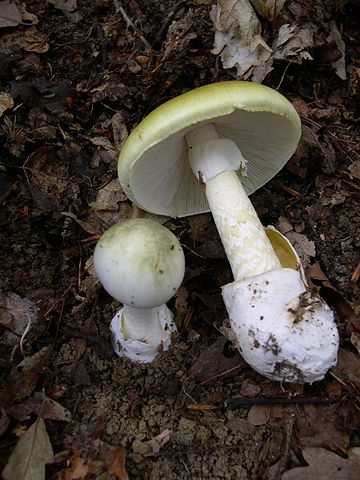
Properties: Highly Toxic, bland
Meridans Entered:
Primary: Liver
Traditional Actions/Indications: Is listed in Zhou, Xie & Yan (2011),
Encyclopedia of Traditional Chinese Medicines but no therapeutic uses are given. Due its extreme toxicity, the absence of any therapeutic potential in mainstream medicine and the impossibility of judging a therapeutic dose if it had any, the only possible safe (but still risky) use would be a topical application to poison anything living on the skin.
Suggested Daily Dosage: Lethal in even small doses, as little as half a mushroom.
Cautions: Highly toxic and not reduced by cooking. Symptoms may not appear for up to 6-24 hours after consumption after which abdominal cramps, vomiting, and severely dehydrating diarrhoea ensues. These subside after 2-3 days but are followed by liver failure with jaundice, diarrhoea, delirium, seizures, coma, kidney failure and death 6-18 days after ingestion. Silibinin, a product found in milk thistle, is a potential antidote.
Notable Constituents:
- Amatoxin
A group of toxic oligopeptides that are potent and selective inhibitors of RNA polymerase II, a vital enzyme in the synthesis of messenger RNA (mRNA), microRNA, and small nuclear RNA (snRNA). Without mRNA, which is the template for protein synthesis, cell metabolism stops and lysis ensues. Their toxicity is not reduced by cooking until the mushroom is cooked beyond edibility.
- Phalloidin
Very toxic bicyclic heptapeptide that causes fatal liver, kidney and CNS damage
- Phalloin
Another phallotoxin similar to phalloidin.
Does not appear in any formulae listed on this site
Research Links & References: (click to display)
Research Links:
Reference Notes:
Individual herb information has sourced mainly from TCM Wiki and American Dragon for basic data and then updated manually with my own notes. Zhou, Xie and Yan (2011): Encyclopedia of Traditional Chinese Medicines, Vol. 5, and A+ Medical Encyclopaedia have been used for entries not available from those sources with additional material searched for and filled in where available. Western herbs not appearing in the Chinese literature have used Ross (2010): Combining Western Herbs and Chinese Medicine: A Clinical Materia Medica, White Rabbit Institute of Healing and therapeutika.ch. Choices of which source to use or combine have been my own.
These pages are intended to assist clinicians and are not intended for self-diagnosis or treatment for which a qualified professional should be consulted. Actions and indications are taken from traditional uses and do not necessarily reflect the evidence base which should be researched independently. Dosages are for guidance only and will vary dependening on the potency of the batch and the tolerance of the individual so should be evaluated by a professional based on individual needs.