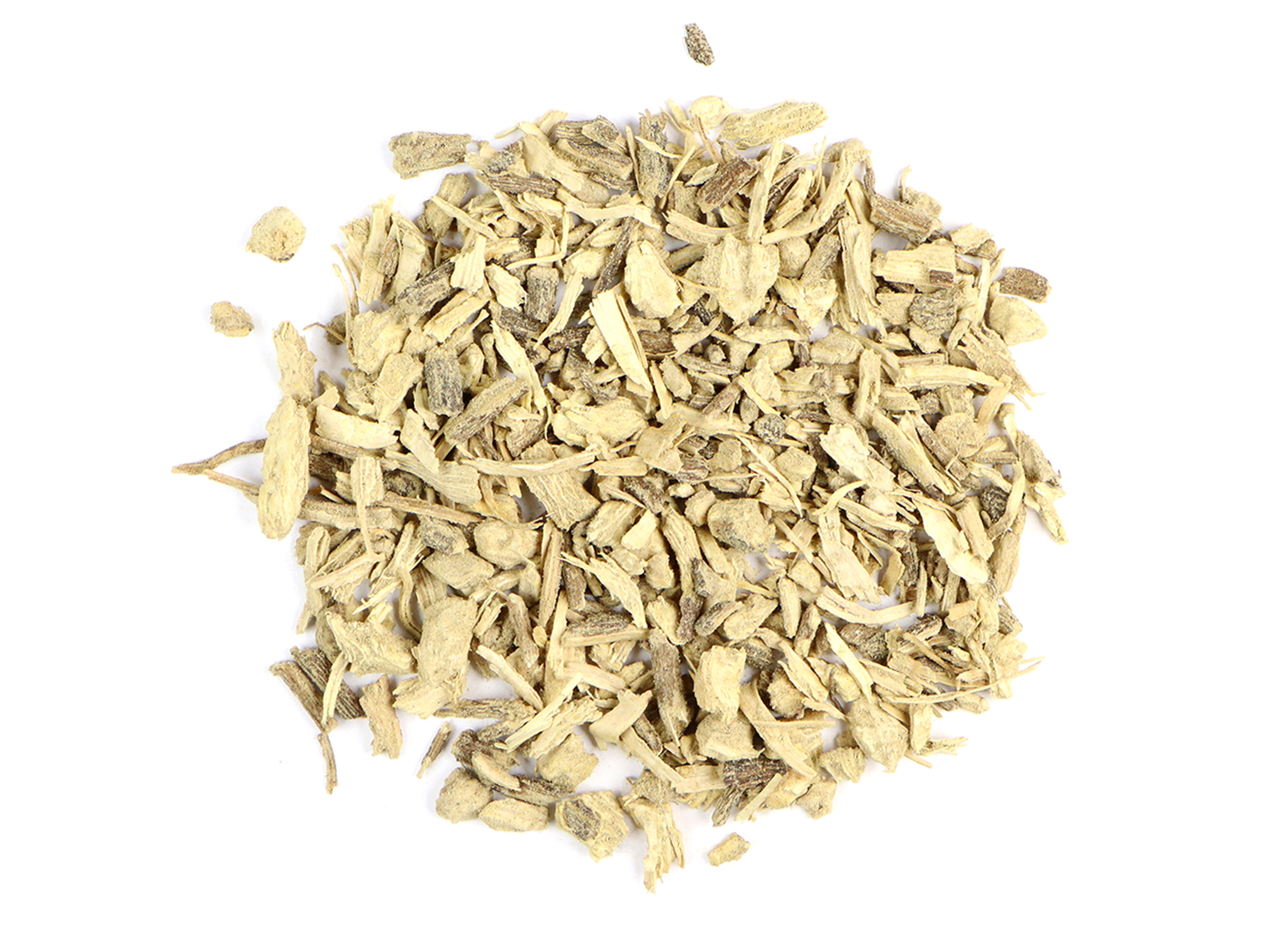
Properties: Neutral, bitter
Meridans Entered:
Primary: Heart
Traditional Actions/Indications:
- Calms the Shen, Regulates the Blood and alleviates pain
Anxiety, stress and insomnia
Seizures
Pre-menstrual syndrome
Pain and muscle spasms
Suggested Daily Dosage: Recommended safe dose is 250mg of kavalactones but traditional use is often much higher, at up to 10-15 g of powder, or up to 35 g of traditional root preparation.
Cautions: Excessive consumption can produce intoxicating effects and possible liver damage. Safe dosing is difficult to ascertain as therapeutic dose can vary drastically according to the strength of the product with dosages estimates ranging from 4 - 60 g of powder (Kava Guides, 2021).
Long term and heavy consumption may cause a "kava dermopathy" or kani kani (in Fiji), a reversible skin condition characterised by dry and scaly skin covering the palms of the hands, soles of the feet, and back.
In the UK it is banned for use in unlicensed medicines, except for external use. It is a criminal offence to sell, supply or import any medicinal product containing kava for human consumption, although it is legal to possess kava for personal use, or to import it for purposes other than human consumption.
Interactions:
- Chlorzoxazone: Decreases metabolite/chlorzoxazone serum ratio.
- Alcohol: Can have additive sedative and cognitive impairment effects.
- Anxiolytics (CNS depressants such as benzodiazepines and barbiturates): potential additive effects such as sedation.
- Levodopa: May cause the medication to wear off early.
- Recommended to stop 24 hours before surgery due to risk of potentiating sedative effects of anaesthetic agents, hepatotoxicity, GABA-R inhibition and cava dermopathy (Ang-Lee, Moss & Yuan, 2001; Yilmaz & Çifci, 2018).
Notable Constituents:
- Kavalactones
Lactone compounds under research for potential psychotropic effects, including anxiolytic and sedative/hypnotic activities, and also possible severe and even fatal hepatotoxicity.
Does not appear in any formulae listed on this site
Research Links & References: (click to display)
Research Links:
Reference Notes:
Individual herb information has sourced mainly from TCM Wiki and American Dragon for basic data and then updated manually with my own notes. Zhou, Xie and Yan (2011): Encyclopedia of Traditional Chinese Medicines, Vol. 5, and A+ Medical Encyclopaedia have been used for entries not available from those sources with additional material searched for and filled in where available. Western herbs not appearing in the Chinese literature have used Ross (2010): Combining Western Herbs and Chinese Medicine: A Clinical Materia Medica, White Rabbit Institute of Healing and therapeutika.ch. Choices of which source to use or combine have been my own.
These pages are intended to assist clinicians and are not intended for self-diagnosis or treatment for which a qualified professional should be consulted. Actions and indications are taken from traditional uses and do not necessarily reflect the evidence base which should be researched independently. Dosages are for guidance only and will vary dependening on the potency of the batch and the tolerance of the individual so should be evaluated by a professional based on individual needs.