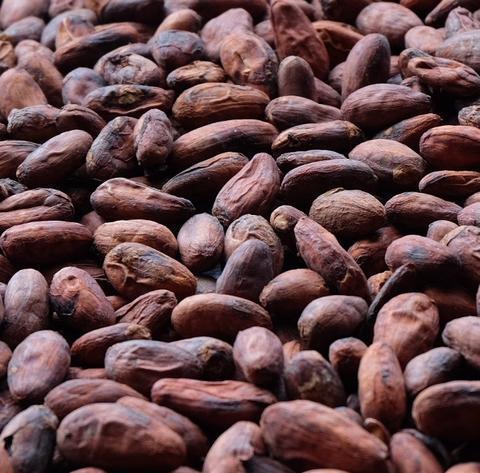
Properties: Bitter, Warming, Slightly Pungent
Meridans Entered:
Primary: Heart, Liver, Kidney
Traditional Actions/Indications:
- Warms the Yang
Weakness after long illness
Premature ageing
Fevers due to colds
Bronchial spasms due to Cold chest<
Poor appetite
- Promotes urination
Hypertension (high blood pressure)
- Raises the Spirit
Low mood, irritability
Poor memory
Insomnia, light sleeping, restless leg syndrome
Suggested Daily Dosage: Typically 3-9g powder in decoction.
Cautions: Cocoa is generally considered safe, however caution should be taken if sensitive to caffeine due to its natural content (230mg/100g) and additional sugar that many cocoa products contain.
Traditional Mayan culture held cacao beverages used in rituals to be only suitable for men. It was believed they would be toxic to women and children (although the current usage in all ages and genders suggests this is not the case).
Notable Constituents:
- Theobromine
The principle alkaloid in the cacao bean responsible for its bitter taste, it is a xanthine alkaloid that is used as a bronchodilator and as a vasodilator via suppression of the vagus nerve. Despite being almost identical to caffeine, it has much less effect on the central nervous system with practically no stimulant properties. It was formerly used in the treatment of angina pectoris and hypertension. Constitutes approx 2% of cocoa.
- Caffeine
Xanthine alkaloid that acts as a central nervous system (CNS) stimulant, present in much lower quantities than theobromine (230 mg / 100g). Caffeine and its downstream metabolites, theobromine and theophylline, may account for the majority of the pleasurable effects (Smit, 2011) and neuroprotective effects (Camandola, Plick & Mattson, 2019) of cacao, other components being too low to exert a pharmacological effect, or being unable to pass the blood-brain barrier .
- Theophylline
Alkaloid derivative of xanthine that is a phosphodiesterase inhibitor used in therapy for respiratory diseases such as chronic obstructive pulmonary disease (COPD) and asthma.
- Magnesium
Macronutrient that is an important enzyme cofactor and essential to several metabolic processes, including regulation of blood pressure and RNA, DNA and protein synthesis. It also supports deep, restorative sleep by maintaining healthy levels of GABA, a neurotransmitter that promotes sleep. Present in 499 mg / 100g or 141% RDA.
- Potassium
Macronutrient and electrolyte necessary for muscle contraction, nerve function, steady heart contractions and maintenance of blood pressure. Present in 2000 mg / 100g or 57% RDA.
- Tryptophan
Essential amino acid that is a precursor of serotonin and melatonin which helps regulate appetite, sleep, mood and pain. It can be up to 13.3 µg / g in chocolate (Guillén-Casla et al., 2012).
- Serotonin
Neurotransmitter that is important in the regulation of mood and, as the precursor of melatonin, sleep. It is present in up to 2.93 µg / g in 85% cacao chocolate (Guillén-Casla et al., 2012).
- Tyrosine
Non-essential amino acid that can be synthesised from phenylalanine and is a precursor of catecholamines: dopamine, adrenaline and noradrenaline.
- Phenylethylamine
Alkaloid that stimulates the release of acetylcholine, improving cognitive function, memory and mood.
- N-Oleoylethanolamine
Monounsaturated ethanolamide of oleic acid and analogue of the endocannabinoid Anandamide. Anandamide is a fatty acid neurotransmitter and the first endocannabinoid to be discovered, named after Ananda, the Sankrit word for happiness, pleasure, joy and delight. It binds to the same cannabinoid receptors as THC in cannabis. N-Oleoylethanolamine has a role as a PPARα agonist that regulates fatty acid beta-oxidation and energy homeostasis, and acts as a geroprotector. It is also a fatty acid amide hydrolase inhibitor preventing hte breakdown of anandamide and oleamide, a sleep inducing fatty acid that reduces nociception in mice and may have potential in pain control.
- N-linoleoylethanolamine
Monounsaturated ethanolamide of linoleic acid that is also an analogue of the endocannabinoid Anandamide and inhibits fatty acid amide hydrolase.
- Clovamide
Found in trace amounts in cocoa and red clover, it has been found to have neuroprotective effects in vitro.
Notes:
Initially a ritual medicine from Mesoamerica, its use has been traced back to Mokaya and Olmec ceramic vessels containing cocoa residue from 1900-900BC. It was called "xocolati" by the Aztecs which means "bitter water" and was often flavoured with maize, chili, vanilla and honey.
The Florentine Codex (1590) which described Aztec customs and practices says of the Cacao Tree:
"It has broad branches. It is just a round tree. Its fruit is like an ear of dried maize, like an ear of green corn. Its name is "cacao ear". Some are reddish brown, some whitish brown, some bluish brown. Its center, that which is its interior, its filled interior, is like a kernal of maize. The name of this when growing is "cacao". This is edible, potable.
This cacao, when much is drunk, when much is consumed, especially that which is green, which is tender, makes one drunk, takes effect on one, makes one dizzy, confuses, makes one sick, deranges one. When an ordinary amount is drunk, it gladdens one, consoles one, invigorates one. Thus it is said: "I take cacao. I wet my lips. I refresh myself."" (Book 12, Ch. 6, para. 7. Trans. Dibble & Anderson).
-----------------------------------
The information presented here is taken from: White Rabbit Institute, Chrysalis Natural Medicine Clinic and Drugs.com.
Indications for bronchial spasms come from:
Awortwe et al (2004): Unsweetened natural cocoa has anti-asthmatic potential, in International Journal of Immunopathology and Pharmacology 27(2). DOI: 10.1177/039463201402700207
Morice et al (2017): Theobromine for the treatment of persistent cough: a randomised, multicentre, double-blind, placebo-controlled clinical trial, in Journal of Thoracic Disease 9(7). DOI: 10.21037/jtd.2017.06.18
A detailed overview of the historical use of chocolate is provided by Dillinger et al (2000): Food of the gods: cure for humanity? A cultural history of the medicinal and ritual use of chocolate. The Journal of Nutrition 130(8), 1 Aug 2000, Pp. 2057S-2072S. DOI: 10.1093/jn/130.8.2057S
----------------------------------------
Most beans have a high FODMAP rating due to their fructan content, but Monash University found that cacao powder was low FODMAP in servings less than 2-4 heaped teaspoons of cocoa powder, or less than 3 oz of dark chocolate (Bolan, 2022). Milk and white chocolate were only low FODMAP in doses less than 1 oz before the lactose content made it increase and potentially cause reactivity.
Does not appear in any formulae listed on this site
Research Links & References: (click to display)
Research Links:
Reference Notes:
Individual herb information has sourced mainly from TCM Wiki and American Dragon for basic data and then updated manually with my own notes. Zhou, Xie and Yan (2011): Encyclopedia of Traditional Chinese Medicines, Vol. 5, and A+ Medical Encyclopaedia have been used for entries not available from those sources with additional material searched for and filled in where available. Western herbs not appearing in the Chinese literature have used Ross (2010): Combining Western Herbs and Chinese Medicine: A Clinical Materia Medica, White Rabbit Institute of Healing and therapeutika.ch. Choices of which source to use or combine have been my own.
These pages are intended to assist clinicians and are not intended for self-diagnosis or treatment for which a qualified professional should be consulted. Actions and indications are taken from traditional uses and do not necessarily reflect the evidence base which should be researched independently. Dosages are for guidance only and will vary dependening on the potency of the batch and the tolerance of the individual so should be evaluated by a professional based on individual needs.