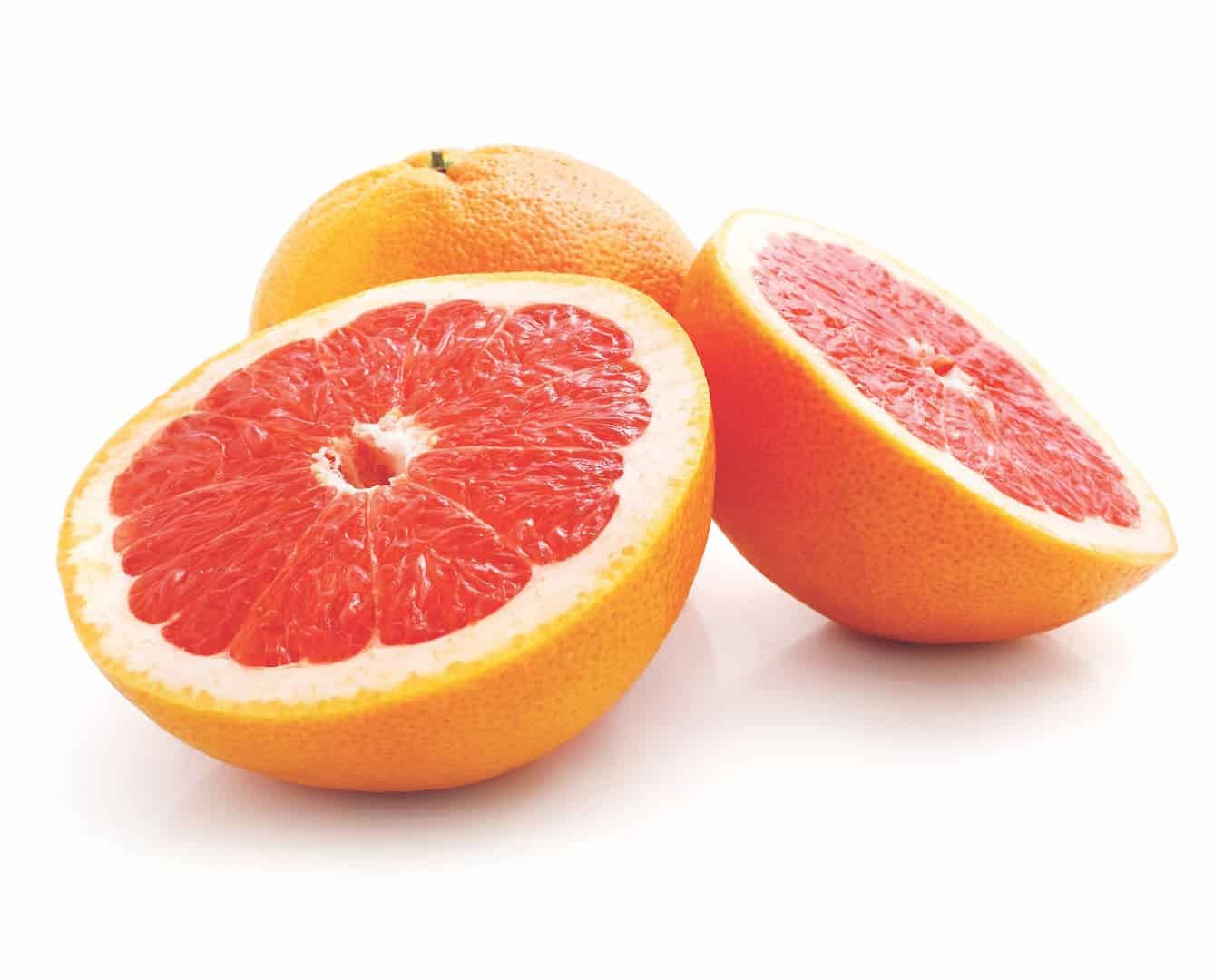
Properties: Sweet, sour, cold
Meridans Entered:
Primary: Lung, Stomach, Spleen
Traditional Actions/Indications:
- Regulates Qi, clears Heat and transforms Phlegm
Cough and wheezing, asthma
High cholesterol, atherosclerosis
Weight loss, obesity
Psoriasis
Suggested Daily Dosage: Eaten as fruit.
Cautions: Naringin and Furanocoumarins in grapefruit inhibit cytochrome P450 3A4 in the gut, one of the main enzymes that breaks down drugs. This means that if a drug that is normally broken down by cytochrome P450 3A4 is taken at the same time as grapefruit, more 'active' drug will be absorbed by the body, as less will have been inactivated by the enzyme.
Interactions:
- Medications altered by Cytochrome P450: May increase the effect and side effects of many medications by inhibiting these enzymes causing a slower breakdown of drugs.
- Recommended to stop 2 weeks before surgery due to inhibition CYP3A4 which can alter the metabolism of various medications (Ang-Lee, Moss & Yuan, 2001; Yilmaz & Çifci, 2018).
Notable Constituents:
- Ascorbic Acid
Vitamin C is a potent reducing and antioxidant agent with functions in fighting bacterial infections, detoxifying reactions, iron absorption and the formation of collagen in fibrous tissue, teeth, bones, connective tissue, skin, and capillaries. It cannot be produced or stored by humans and must be obtained in the diet.
- Hesperidin
Glycoside form of hesperetin found in citrus fruits that is most commonly used for blood vessel conditions such as hemorrhoids, varicose veins, and poor circulation. Hesperetin also functions as an antioxidant and an antineoplastic agent
Does not appear in any formulae listed on this site
Research Links & References: (click to display)
Research Links:
Reference Notes:
Individual herb information has sourced mainly from TCM Wiki and American Dragon for basic data and then updated manually with my own notes. Zhou, Xie and Yan (2011): Encyclopedia of Traditional Chinese Medicines, Vol. 5, and A+ Medical Encyclopaedia have been used for entries not available from those sources with additional material searched for and filled in where available. Western herbs not appearing in the Chinese literature have used Ross (2010): Combining Western Herbs and Chinese Medicine: A Clinical Materia Medica, White Rabbit Institute of Healing and therapeutika.ch. Choices of which source to use or combine have been my own.
These pages are intended to assist clinicians and are not intended for self-diagnosis or treatment for which a qualified professional should be consulted. Actions and indications are taken from traditional uses and do not necessarily reflect the evidence base which should be researched independently. Dosages are for guidance only and will vary dependening on the potency of the batch and the tolerance of the individual so should be evaluated by a professional based on individual needs.